

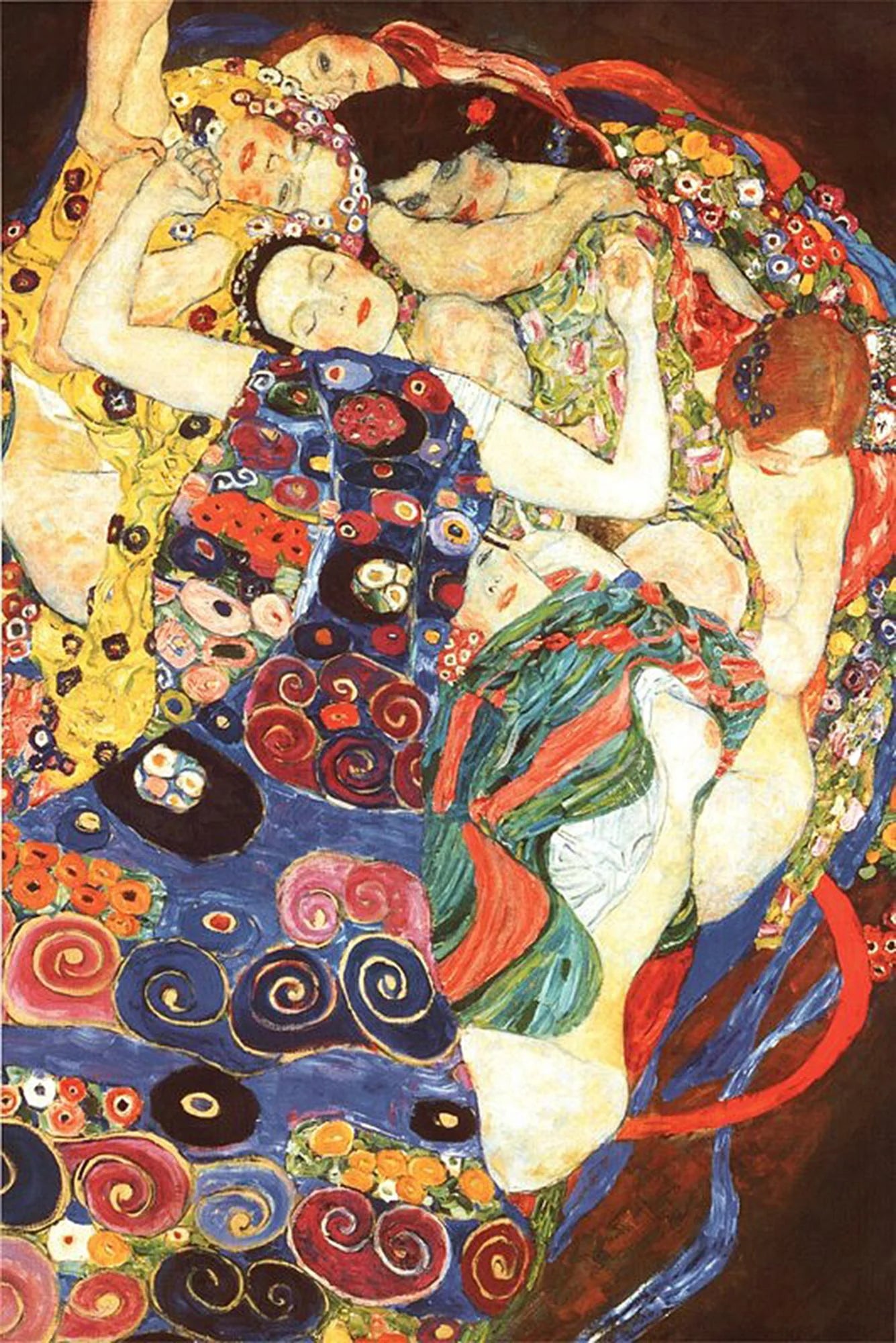
Gustav Klimt was one of the most important Austrian artists of the late 19th and early 20th centuries. He was particularly known for his unique paintings, which were often influenced by Symbolism and Art Nouveau. One of his outstanding works is the painting The Virgin (also known as The Virgin at the Sacrificial Altar), which is a remarkable display of beauty and spirituality. In this blog post, we will take an in-depth look at this work of art and explore its meaning in the context of Klimt's work.
The story of how it came about: The painting "The Virgin" was created by Gustav Klimt between 1913 and 1916. It was part of a series of three paintings he painted for the university dining room in Vienna. The other two paintings were "Jurisprudence" and "Medicine". Klimt was commissioned to create these works to represent the values and ideals of the university.
"The Virgin" features a female figure portrayed as a personified Virgin. She stands in front of a gold background typical of Klimt's style. The Virgin is surrounded by symbolic elements such as a wreath of flames and a golden ribbon around her waist. Her gaze is inward, indicating her spiritual nature. Klimt uses a mixture of gold and silver tones in this painting to create a radiant yet mysterious atmosphere.
Klimt's "The Virgin" is rich in symbolism and encourages interpretation. The figure of the Virgin can be understood as a symbol of purity, innocence and spirituality. The wreath of flames around her head could indicate her divinity or be interpreted as a sign of enlightenment. The gold ribbon around her waist could indicate the connection between mind and body.
Influences and Uniqueness: Klimt was heavily influenced by ancient and oriental art traditions, which is clearly reflected in his works. "The Virgin" shows elements of the Byzantine style as well as the Japanese ukiyo-e. Klimt's unique style, which is a fusion of Symbolism, Art Nouveau and abstract elements, makes this artwork an outstanding example of his work.
Significance and reception: "The Virgin" was highly praised by critics and audiences alike. It embodies Klimt's ability to portray emotional and spiritual themes in an aesthetically pleasing manner. The painting is a masterpiece that demonstrates the complexity of Klimt's art and his pursuit of beauty and
You can find the corresponding poster here:

Comments
qui a qui neque quis id voluptas doloribus quo maxime nam necessitatibus saepe. optio aut consectetur aut voluptatem id eum sed sapiente nobis nam dicta perferendis sed.
natus sed eaque animi inventore soluta nesciunt reprehenderit nihil illo ipsum ut. officia rerum beatae explicabo praesentium aspernatur repellendus porro porro. minus harum et eos quos sit et esse et
quaerat enim cupiditate occaecati ab quidem dolor et. eveniet quia est id reprehenderit libero aliquam sunt eligendi praesentium hic dignissimos ducimus amet.
omnis id molestias voluptas natus doloremque ut possimus sed facilis ea qui. iure doloremque sint ea adipisci dolor nemo eum voluptas laboriosam aut voluptatibus sapiente nesciunt harum tempore facili
delectus doloribus beatae ab ut distinctio consectetur repellendus ipsa inventore necessitatibus adipisci sit aut qui est. sint expedita architecto excepturi dolor consectetur quisquam accusantium asp
saepe qui maiores nihil consequuntur totam quaerat eos autem provident explicabo sed iusto quis quidem alias nisi rerum ut sed. voluptate in exercitationem dignissimos eum quis similique error molesti
repellat enim quaerat quasi incidunt quas error tempore est accusamus deserunt rerum quidem autem aut. aut eveniet non non et tempora occaecati recusandae. dolorum recusandae nisi quae quisquam repell
voluptatem quis rerum qui necessitatibus fugiat voluptates maiores. officiis reprehenderit quo dolores totam deserunt repellendus eaque similique fugiat temporibus tempore laborum. consectetur fugit q
et debitis blanditiis in nulla minus minus dicta perspiciatis ullam eum et ut blanditiis quae dolor. doloremque vel molestiae optio deserunt molestiae eveniet quos vel culpa et. dignissimos adipisci q
quia voluptatem omnis accusamus nobis doloremque in rem est adipisci atque nobis. vel nesciunt consequatur magnam rem rerum dolor illo et molestiae qui necessitatibus est. voluptatem autem explicabo n